The Abrupt End of Mark T.'s Cloned Card Scheme: A Cautionary Tale
You can trace Mark T.’s $480 darknet purchase through four withdrawals, ATM footage, digital records, and a five-year federal sentence.
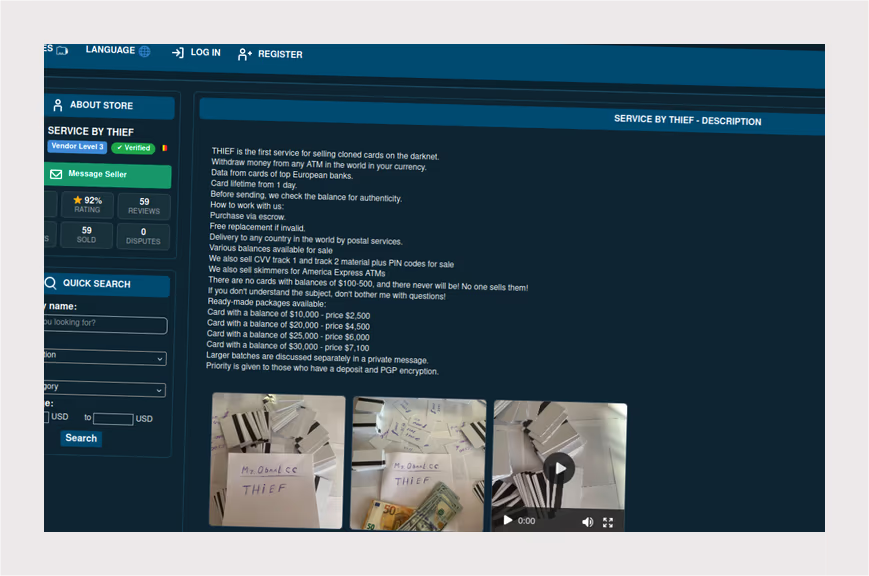
In November 2024, a man named Mark T., aged 34, from Tampa Bay sought an easy way to obtain cash. To purchase six counterfeit debit cards, complete with their PINs, $480 was invested by him in cryptocurrency from a darknet site.
This situation exemplifies a case for analysis. It does not promote the acquisition of cloned cards. Rather, it highlights the blend of online privacy and real-world identification. The timeline of events leading to Mark's apprehension spanned 72 hours. Notably, he was arrested on the 15th day of the investigation.
- Step 1: Reconstruct What Mark Purchased
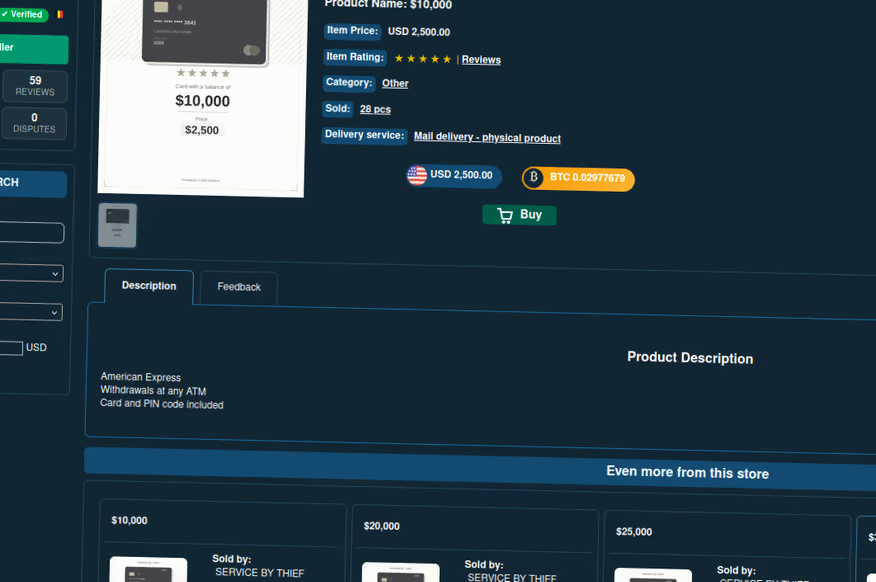
What did Mark obtain? Start by considering the illicit goods involved. Each card included compromised magnetic tracks sourced from authentic bank accounts. The records for track 1 and track 2 originated from carding activities.
The cards were sent to him in unmarked packages. Mark opted to pay using Monero, chosen for its limited traceability. At first glance, the transaction appeared to be successful.
From his initial three ATM transactions, he amassed $4,200. On his fourth visit, he withdrew an additional $700. This marked the end of his successful withdrawals.
You might come across related queries like carding forums dark web. Other terms include cloned cards reddit, card skimming reddit, and cf card cloning. However, none of these specify the marketplace utilized in this case. The source intentionally conceals its identity.
- Step 2: Follow the Carding Chain
How did the scheme operate? This operation unfolded in a series of five related actions, resembling a relay where information circulated between participants.
- Criminals collected magnetic stripe information through skimmers, phishing, or buying data dumps.
- They imprinted this data onto blank plastic cards, ensuring they appeared legitimate with names and expiration dates.
- PINs were compromised using overlay keypads or hidden cameras, allowing buyers to access cash.
- Buyers withdrew money before account holders noticed the theft and could freeze their cards.
- The illicit cash was then laundered, usually by converting it to cryptocurrency, which served to conceal the financial trail.
Mark was involved in cashing out towards the conclusion of this process. His involvement influenced the length of his sentence, even though it did not alter his culpability.
- Step 3: Treat Every ATM as an Evidence System
Why is it crucial to consider an ATM as a system of evidence? An ATM serves multiple functions beyond cash withdrawal. Modern devices frequently integrate various surveillance technologies.
A camera aimed at users generally captures footage in 1080 resolution. Additionally, infrared features allow for recording in low-light conditions. Some types might also possess a second camera that remains concealed.
Records of transactions maintain an accurate log of the time, amount taken, card identifier, ATM identification, and transaction outcome. Geolocation details link to the bank’s internal databases, while network records document the processing of requests and associated connection data.
At an ATM located in Tampa Bay, Mark revealed his complete identity. He refrained from using disguises such as masks or hats. The camera documented his presence for 23 seconds while he withdrew $700. This scenario signifies the end of his anonymity. Although he was not involved in the darknet, his physical presence was essential to complete this action.
- Step 4: Track the Investigation Day by Day
How was the suspect monitored during the investigation? Maintaining an accurate timeline is crucial for comprehending how the investigation unfolded. The initial phase was automated, occurring prior to the assignment of any investigators.
- On 1 November 2024, unauthorized transactions were reported by three individuals hailing from Florida, Georgia, and North Carolina. Banks promptly froze affected cards and initiated fraud alerts.
- Day 3: Banks' systems noticed a troubling surge in withdrawals involving cloned cards across multiple states. This prompted an emergency response, leading to a formal investigation by bank officials.
- On Day 5, responsibility for investigating the case was assumed by the U.S. Secret Service, which focused on financial crimes. Analysts sought transaction records and surveillance video from the associated ATMs.
- On Day 8, a clear image of the suspect emerged from footage captured by an ATM. Mark T. was identified through a comparison with data from the Florida Department of Public Safety, notably lacking any prior criminal record. The four ATM cash withdrawals were made exclusively in locations that were 40 miles from his home.
- Day 12: Investigators obtained a warrant to review Mark's digital activities, which included his browsing history, ISP logs, and cryptocurrency wallet transactions. Visits to Tor exit nodes occurred at the same time as the transactions, as revealed by the analysis. A court order permitted access to the exchange where Mark acquired Monero, linking his wallet to a darknet marketplace account.
- On Day 14, a search warrant was executed at Mark's residence. On Day 14, law enforcement discovered $3,200 in cash, alongside a laptop indicating darknet activities, a device for reading magnetic stripes, and six blank plastic cards, while executing a search warrant.
- On Day 15, Mark was taken into custody. Purchasing the cloned cards was confessed to by him, along with an admission of cashing out four of them. The other two cards were rendered useless as banks had already blocked them.
This comprehensive timeline highlights the diligent efforts made to track fraudulent activities, showcasing the effective measures taken during the investigation.
- Step 5: Verify the Case Numbers
How did the outcome compare with the initial expense? The table places the $480 starting outlay alongside the resulting proceeds and subsequent consequences.
Case Indicator Reported Quantity Combined withdrawal proceeds $4,900 Proceeds from the initial three ATM transactions $4,200 Proceeds from the final ATM transaction $700 Acquisition expense for the cloned cards $480 Interval between withdrawal and apprehension 15 days Counterfeit cards procured 6 Federal correctional term served 5 years, or 60 months Number of withdrawals carried out 4 The total fines and restitution required amount to $22,000. Supervised release lasts for a duration of 3 years. - Step 6: Identify Why Monero Failed to Shield Him
Why did an anonymity-focused cryptocurrency provide insufficient cover? You should examine the purchase point rather than Monero alone.
Mark purchased Monero via a centralized exchange that required KYC verification. He provided his identification documents. Under legal compulsion, his identity and transaction history were revealed by the exchange. The original transaction provided clear evidence, despite the difficulty in tracking subsequent Monero transfers.
Timing established another link. The acquisition of Monero, payment on the marketplace, delivery, and withdrawals all occurred within a two-week span. These overlapping periods provided circumstantial yet significant proof.
Physical evidence created a direct connection. Seized cards contained traces that matched data harvested from actual victims. Cryptocurrency could not erase those magnetic records.
The ATM footage independently positioned Mark at the scene of the crime. You cannot launder a recorded face like converted cash. Even without additional evidence, the video still associated him with the withdrawal.
- Step 7: Examine Each Operational Mistake
Which choices accelerated identification? You should separate six mistakes identified by the source.
First, Mark used four ATMs within 40 miles of home. Geographic clustering gave anti-fraud systems an immediate pattern. Second, he used no facial disguise. DPS records therefore offered a direct identification route.
Third, the centralized exchange connected his verified identity with Monero. Fourth, he stored cards, the MSR, and his laptop at home. Deleted material would not necessarily have solved that problem. Tor Browser leaves traces, while operating-system update history may indicate usage.
Fifth, officers found $3,200 in matching ATM denominations. This detail was minor, but it strengthened the charge. Sixth, every withdrawal occurred during the same two-week period.
Spreading withdrawals across months might have delayed the automatic alert. This is true only for alert timing. It does not apply to camera identification. The ATM footage could still have exposed him.
- Step 8: Separate Defensive Questions From Case Evidence
What insights can security teams gain from this case? Start by focusing on automated fraud prevention methods utilized by banks. These systems include analysis of patterns, geographical parameters, and scoring frameworks that functioned prior to any human intervention. Continued investment in machine learning for anomaly identification is essential.
The interplay between physical and digital evidence was crucial. Video recordings provided facial recognition, while transaction logs indicated the exact times of activities. Without this precise timing, investigators would struggle to determine which footage held significance.
Know Your Customer (KYC) protocols established a connection between cryptocurrency transactions and verified identities. Cash withdrawals marked another physical endpoint in this chain. Thus, anonymity in cryptocurrency does not ensure discreet actions.
Customer vigilance remains a critical weakness. Many victims failed to detect the fraudulent withdrawals promptly. Accelerated reporting enables banks to lock compromised cards sooner, reducing the window for criminals to access funds.
You may find yourself wondering how to identify a card reader with a skimming device. Related inquiries often include methods for detecting skimmers and ways to inspect for credit card skimming devices. However, this source lacks a specific testing protocol for those inquiries.
It also does not provide an evaluation of images related to ATM skimmers or any skimming detection tool. Claims regarding credit card skimmer protection need more substantial evidence than what is presented in this case. The same limitations apply when discussing credit card skimming defenses.
- Step 9: Read the Verdict and Its Limitation
How did the federal case conclude? Understanding the outcome requires examining the details of the sentencing. In March 2025, Mark entered a guilty plea on two federal counts.
In March 2025, Mark T. pleaded guilty to charges of fraud under 18 U.S.C. § 1029 and money laundering under 18 U.S.C. § 1957, leading to a 60-month prison sentence imposed by the U.S. District Court for the Middle District of Florida. After his prison term, he will serve three years under supervision. Additionally, the court mandated that he pay $22,000 in fines and restitution, which will be allocated to three victims.
The presiding judge emphasized that Mark's role was more akin to that of a consumer in the fraudulent scheme, rather than its orchestrator. This distinction is crucial, as it carries significant implications and risks. Typically, those in higher positions remain hidden, creating ongoing challenges for law enforcement.
Conclude With the Physical Endpoint
You can reduce this case to one decisive transition. A remote purchase became observable when Mark approached an ATM. Cameras, bank logs, exchange KYC, seized cards, and timing then converged.
You cannot inspect the website where the purchase was made because the source withholds its name. That limitation does not weaken the documented sequence. The available record still connects a $480 purchase with $4,900 withdrawn, arrest after 15 days, and five years in prison.
Where to look next
We collect these links for readers who want to compare options. Links.